

- 13 November 2026
Coenzymes are the reason a cheap bulk chemical can be sold as a pharmaceutical ingredient. They are also the part of a formulation most buyers understand least — which is why so much of the category is bought on a datasheet claim rather than a verified specification. This guide covers what coenzymes actually are, the six families that matter commercially, and the manufacturing and QC questions that decide whether the material in your warehouse behaves like the sample you approved.
In this article
- What a coenzyme actually is — and what it is not
- The six coenzyme families that matter commercially
- Why the nicotinamide family dominates demand
- Where coenzymes are used: five demand pools
- Why coenzymes are hard to manufacture
- Enzymatic synthesis: how modern production works
- What to put in a coenzyme specification
- Supplier vetting: seven questions
- Frequently asked questions
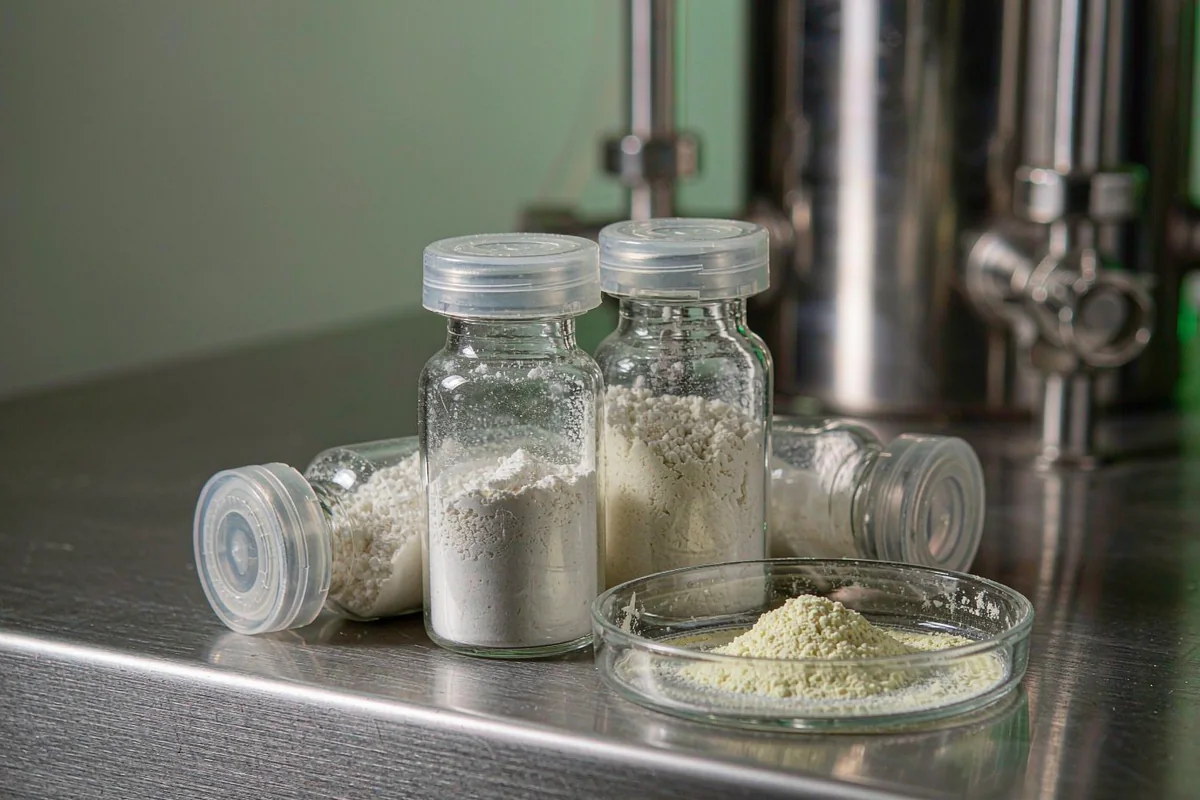
What a Coenzyme Actually Is — and What It Is Not
The IUPAC definition is short and worth quoting exactly: a coenzyme is “the dissociable, low-relative-molecular-mass active group of an enzyme which transfers chemical groups, hydrogen or electrons” (IUPAC Gold Book, C01126). Two words in that sentence carry all the commercial weight: dissociable and transfers.
Dissociable separates a coenzyme from a prosthetic group. A prosthetic group is bound tightly — often covalently — to its protein and is regenerated in place. A coenzyme attaches loosely, does its chemistry, detaches, and is regenerated by a different enzyme somewhere else in the pathway. That is why coenzymes can be sold as standalone bulk ingredients: they are, chemically speaking, consumable carriers rather than permanent parts of an enzyme.
Transfers tells you what each coenzyme is for. Every coenzyme is a carrier for one class of cargo — hydride ions, acyl groups, methyl groups, one-carbon units, phosphate. The protein does the recognition and the rate enhancement; the coenzyme does the moving. Strip the coenzyme out and you are left with an apoenzyme: structurally intact, catalytically dead. Add it back and you have a holoenzyme.
The hierarchy is worth keeping straight, because suppliers blur it:
- Cofactor — the widest term: any non-protein species an enzyme needs. Includes metal ions (Zn²⁺, Mg²⁺, Fe–S clusters) and organic molecules.
- Coenzyme — the organic subset, loosely bound and dissociable. NAD⁺, FAD, coenzyme A.
- Prosthetic group — tightly or covalently bound, not released each turnover. Biotin in carboxylases, lipoamide in pyruvate dehydrogenase.
- Cosubstrate — a coenzyme that is chemically altered in the reaction and must be regenerated by another reaction. NADH acting as a substrate for a reductase.
This is not pedantry. The distinction predicts a real engineering problem: any coenzyme used as a cosubstrate has to be regenerated in situ, and regeneration cost is usually the single largest line item in a biocatalytic process. It is also why the industry talks about “cofactor cost” as the binding constraint on cell-free manufacturing rather than enzyme cost (Zachos et al., Current Opinion in Chemical Biology).
The Six Coenzyme Families That Matter Commercially
Textbooks list dozens of coenzymes. Commercially, the market concentrates into six families, and they differ less in chemistry than in how much they cost per kilogram and how sensitive they are to handling.
| Family | Representatives | Cargo carried | Typical industrial use |
|---|---|---|---|
| Nicotinamide | NAD⁺, NADH, NADP⁺, NADPH, NMN, NMNH, NR | Hydride (H⁻) — two electrons plus a proton | IVD reagent kits, biocatalysis, cell culture, NAD-boosting supplements |
| Flavin | FAD, FMN | One or two electrons; can split into a stable semiquinone | Oxidase-based biosensors, food and clinical analysis, flavin-dependent biocatalysis |
| Thiol / acyl | Coenzyme A, acetyl-CoA, succinyl-CoA, malonyl-CoA | Acyl groups via a thioester bond | Free fatty acid (NEFA) assays, metabolic research, polyketide work |
| Methyl | S-adenosylmethionine (SAM / AdoMet) | Methyl group | Enzymatic methylation, chiral amine and methylated intermediate synthesis |
| One-carbon | Tetrahydrofolate (THF), 5-MTHF, folinic acid | One-carbon units at three oxidation levels | Nucleotide synthesis, 5-MTHF production, cell culture media |
| Carbonyl / amino | Thiamine pyrophosphate (TPP), pyridoxal phosphate (PLP), biotin | Activated aldehydes, amino groups, CO₂ | Microbiology media, transaminase biocatalysis, veterinary and feed diagnostics |
In bulk supply terms the families are not equally accessible. The nicotinamide group is the one with the deepest commercial catalogue: oxidised and reduced forms of both coenzyme I and coenzyme II, plus the sodium salt versions that dissolve faster and handle better in aqueous formulations — NAD⁺, NADH, NADP⁺ and NADP sodium salt. The flavin and one-carbon families are thinner: fewer manufacturers, longer lead times, and more variation between suppliers in what the CoA actually reports.
A structural detail ties the list together and is worth knowing when you evaluate a supplier’s claims about “platform” capability: most of these molecules are nucleotide-derived. NAD⁺ is a dinucleotide; coenzyme A is adenosine diphosphate with a cysteamine arm and pantothenate; SAM is adenosine with a methionine tail; FAD is an adenosine dinucleotide built on riboflavin. The shared adenosine handle is not a coincidence — it is thought to be a molecular fossil of an RNA-dominated early biosphere (Goldman & Kaçar, Journal of Molecular Evolution, 2021).
The practical consequence: whoever can build an adenosine-containing molecule efficiently can build most of this catalogue. That is why coenzyme producers tend to cluster around the nicotinamide family and extend outward, rather than jumping between unrelated chemistries.
Why the Nicotinamide Family Dominates Demand
If you audit a coenzyme supplier’s revenue, the nicotinamide family is usually the majority of it. Two unrelated reasons drive that, and separating them matters because they lead to different specifications.
Reason one: it is the detection chemistry of clinical diagnostics
NADH absorbs strongly at 340 nm; NAD⁺ does not. The molar absorptivity of NADH at 340 nm is approximately 6.22 × 10³ L·mol⁻¹·cm⁻¹. That single physical fact underpins a large fraction of routine clinical chemistry: link your analyte to a dehydrogenase reaction, watch the absorbance at 340 nm change at a fixed rate, and you have a quantitative assay that needs no separation step.
The catalogue of tests built on this is long and commercially stable. Glucose by the hexokinase / G6PDH method. ALT and AST by IFCC-recommended methods. LDH, urea, ammonia, bicarbonate, total bile acids, ethanol. Every one of those reagent kits consumes NAD⁺ or NADH as a reagent, not as an active ingredient — and that changes what “quality” means.
Reason two: it is the cheapest way to move electrons in biocatalysis
Roughly 30% of characterised enzymes are oxidoreductases, and most of them want NAD(P)(H). In cell-free biocatalysis the cofactor is used stoichiometrically, which is precisely why its price and stability dominate process economics. Industry response has been to regenerate rather than consume: enzymatic regeneration systems, redox-neutral cascades pairing a reductive step with an oxidative one, and — increasingly — low-cost nicotinamide biomimetics that are easier to recycle even though natural enzymes bind them poorly (Current Opinion in Chemical Biology).
For a buyer this means the nicotinamide family splits into two commercial products with different requirements. Reagent-grade NAD for a diagnostic kit is bought in kilograms and judged on blank absorbance and lot consistency. Catalyst-grade NAD(H) for a bioreactor is bought in tens of kilograms and judged on cost per mole of reducing equivalents delivered, plus tolerance of the process pH and temperature. Both are “NAD ≥98%”. Neither is interchangeable with the other.
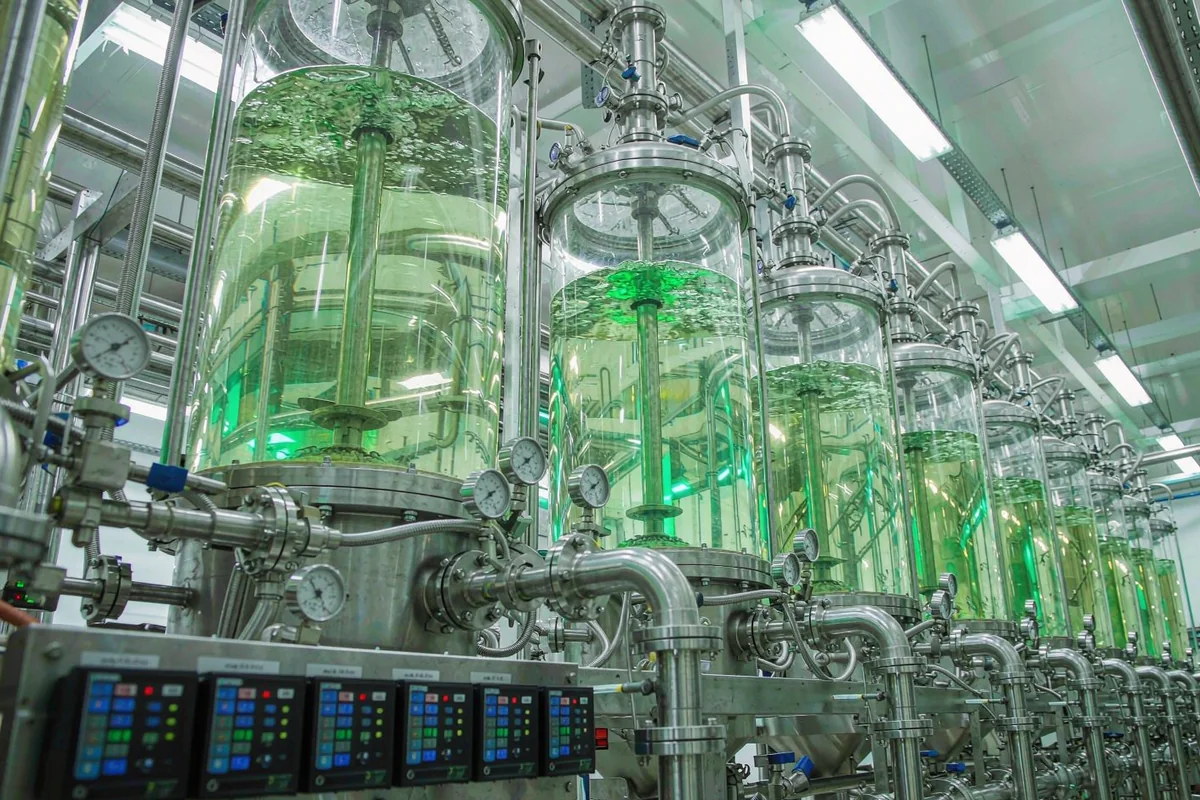
Where Coenzymes Are Used: Five Demand Pools
The same molecule sells into five markets with almost nothing in common except the assay. Understanding which pool your customer sits in tells you what to put in the specification.
| Demand pool | What the coenzyme does | Buying priority | Typical grade |
|---|---|---|---|
| IVD reagents | Signal carrier in 340 nm rate assays | Blank absorbance, lot-to-lot consistency, low UV-active impurities | ≥98%, IVD-grade documentation |
| Biocatalysis / pharma intermediates | Stoichiometric redox partner, recycled in situ | Cost per mole, stability at process pH, residual enzyme and DNA | ≥95–98%, industrial |
| Dietary supplements | NAD⁺ precursor for oral dosing | Purity, isomer ratio, regulatory status of the exact salt form | ≥98–99%, food grade |
| Cosmetics | “Cellular energy” positioning; NAD/NADP in serums | Endotoxin, heavy metals, colour and odour, preservative compatibility | ≥98%, cosmetic grade |
| Cell culture & research | Media additive for stem cell and organoid work | Endotoxin, sterility, animal-origin-free documentation | ≥99%, cell-culture grade |
Two of these pools are growing faster than the rest and pull in opposite directions on price. Supplement-grade NAD precursors — NMN, NMNH and NR — are volume-driven and price-sensitive; the buyer will switch supplier for a 5% delta if the documentation holds. Cell-culture and bioprocess demand is documentation-driven and price-insensitive; the buyer will pay a premium for an animal-origin-free statement and a low endotoxin figure, because a failed batch downstream costs far more than the raw material.
If you are qualifying a supplier across several of these pools at once, be explicit about which one each SKU is for. A single “NAD ≥98%” line in a catalogue is not a specification — it is a starting point for a conversation.
Why Coenzymes Are Hard to Manufacture
Three problems, and all three get worse as the molecule gets larger.
1. The molecules are structurally elaborate
NAD⁺ is a dinucleotide with two ribose rings, two phosphate linkages, a glycosidic bond that is chemically fragile and an adenylate anhydride that hydrolyses in water. Assembling that from scratch by organic synthesis means many steps, protecting-group choreography and low overall yield. It is done — but it is expensive, and each step is a chance to introduce the wrong stereochemistry.
2. The reduced forms are chemically restless
NADH, NADPH and NMNH carry a hydrogen-rich nicotinamide ring that wants to give its electrons away. They oxidise on contact with air, degrade faster in acid, and are sensitive to light and heat. Published stability work on nicotinamide cofactors in common aqueous buffers puts the optimum for the reduced forms around pH 8.5, with degradation accelerating sharply as pH falls (Molecules, 2024 — stability of nicotinamide cofactors). For oral dosage forms this is the whole problem: plain NADH powder in a gelatin capsule has to survive a stomach at pH 1–2. We covered the formulation side of that in NADH vs NMNH: stability and dosage-form choice.
3. The natural concentration inside cells is low
Direct extraction from biomass is theoretically possible and practically unattractive: you harvest a lot of cells to recover a little coenzyme, and the purification train to separate NAD⁺ from NADH from NADP⁺ from the nucleotide pool is punishing. This is the reason the industry moved to synthesis rather than extraction, and then from chemical synthesis to enzymatic routes.
Enzymatic Synthesis: How Modern Production Works
The logic of an enzymatic route is to stop building the molecule from petrochemical blocks and instead run the same chemistry biology already runs — but in a vessel, with purified enzymes, at concentrations a cell would never tolerate.
The most instructive recent example is a chemo-enzymatic cascade that builds NADPH from three cheap inputs: crude xylose from sugarcane bagasse, polyphosphate, and nicotinamide. The authors assembled eleven enzymes in a single pot, used a polyphosphate-driven ATP regeneration system to activate the sugar and the nicotinamide, and reached NADPH titres up to 2.0 g·L⁻¹. They then used that NADPH in the same programme to reduce folic acid to tetrahydrofolate — a coenzyme being used to make another coenzyme (Wang et al., Green Chemistry, 2025;27:6437–6448).
That paper is worth reading for a second reason: it shows where the cost actually sits. The bottleneck is not the enzyme — recombinant enzymes are cheap enough now. The bottleneck is the regeneration stoichiometry. You need a sacrificial electron donor, an ATP-recycling module, and a cascade long enough to be efficient but short enough to avoid intermediate purification.
Parallel work attacks the same problem from the cofactor side. A 2024 study engineered a thermophilic glucose-6-phosphate dehydrogenase to accept the biomimetic coenzyme NMN⁺, then built an in vitro synthetic enzymatic biosystem that fully oxidises biomass sugars to regenerate 12 molecules of NMNH from one molecule of glucose (Li et al., ChemSusChem, 2024). Twelve-for-one regeneration is the number that makes a low-cost biomimetic cofactor commercially interesting.
What an enzymatic route actually buys you
- Water as the solvent. No chlorinated solvents, no solvent-recovery train, no residual-solvent profile to defend to a customer.
- Mild conditions. Near-neutral pH and moderate temperature protect the product from the degradation pathways described above — you are not purifying a molecule you have already partly destroyed.
- Stereochemical control. Enzymes make the β-anomer almost exclusively. This is not a small detail; β-NAD⁺ is the biologically active form and the α-anomer is an impurity that has to be removed by chromatography.
- A cleaner impurity profile. Fewer structural analogues of the target, because the enzymes are selective for their real substrates.
The trade-off is real and worth stating honestly: an enzymatic route introduces its own residue class — protein, nucleic acid and fermentation media components — that a purely chemical route does not have. We covered that in detail in green enzymatic synthesis and the solvent-free route. If your application is parenteral, cell culture or an IVD kit with a tight blank, that is the section of the CoA you need to read first.
What to Put in a Coenzyme Specification
A purchase specification should be short enough to be enforced and specific enough to be auditable. These are the ten lines we would put in one.
| # | Parameter | Typical requirement | Method | Why it is on the list |
|---|---|---|---|---|
| 1 | Assay (content, dry basis) | ≥98.0% for NAD/NADH/NADP; ≥99.0% for supplement grade | HPLC external standard, or UV enzymatic assay | The headline number, and the one most often quoted without a method. |
| 2 | Isomer ratio (α / β) | β-anomer ≥98% of total; α declared | HPLC with an isomer-resolving column | Only the β-anomer is biologically active. Chemical routes generate α; enzymatic routes largely do not. |
| 3 | Related substances | Each unspecified impurity ≤0.5%; total ≤2.0% | HPLC area normalisation | Catches hydrolysis products (ADP-ribose, NMN, nicotinamide) and process analogues. |
| 4 | Blank absorbance (A340) | Declared per lot, with a lot-to-lot drift limit | Dissolve at working concentration, read at 340 nm | The IVD fitness test. Purity alone does not predict it. |
| 5 | Water content | ≤5% (powder); ≤3% for hygroscopic salts | Karl Fischer | Water drives hydrolysis of the pyrophosphate bond. It is the most common cause of potency loss in storage. |
| 6 | Residual solvents | ICH Q3C class 2/3 limits; “not detected” for class 1 | GC headspace | Applies chiefly to chemical routes, but check anyway — purification solvents count. |
| 7 | Residual protein & DNA | Declared (e.g. protein ≤0.1%, DNA not detectable) | Bradford / BCA; qPCR | Enzymatic-route specific. Matters for cell culture, parenteral and some IVD formats. |
| 8 | Endotoxin | ≤0.5 EU/mg for cell-culture grade; declared otherwise | LAL | Only relevant for in-vitro cell work and injectables — but then it is decisive. |
| 9 | Heavy metals | ≤10 ppm total (ICH Q3D route-specific) | ICP-MS | Nickel and copper from bioreactor hardware; also a cosmetic-grade requirement. |
| 10 | Stability | 24 months at 2–8 °C, or 24 months ambient for the salt form supplied | ICH Q1A long-term plus accelerated | Must be for the exact salt and packaging you buy — the disodium salt and the free acid behave differently. |
Three of those ten lines — isomer ratio, blank absorbance, residual protein/DNA — are the ones that separate a supplier who actually manufactures the molecule from one who buys and repackages it. Ask for them on a batch-specific CoA and watch which ones come back blank.
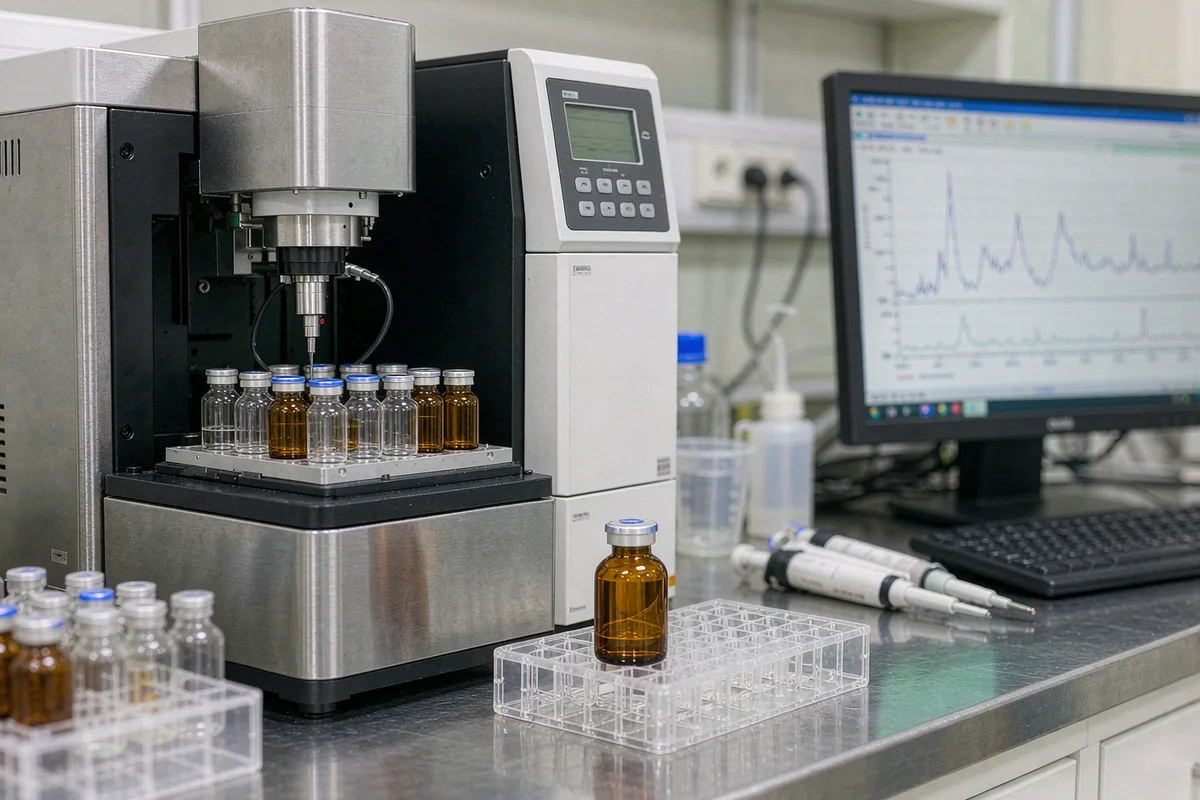
Supplier Vetting: Seven Questions
These are the questions we would want a customer to ask us, and the ones that reliably separate manufacturers from traders.
- Which manufacturing route do you use — extraction, chemical synthesis, or enzymatic? A vague answer here usually means the supplier does not control the route.
- Can you give me the α/β isomer ratio on the last three lots? Three lots, not one. Consistency is the point.
- What is the A340 blank, and what is the lot-to-lot tolerance? If the term is unfamiliar to the sales contact, the company is not supplying IVD customers.
- Do you test for residual protein and DNA? If the route is enzymatic and the answer is no, the purification train is incomplete.
- Which legal entity holds the GMP / ISO certificates, and which site is my material made at? Certificates held by a trading arm do not cover a third-party plant.
- Can you supply the salt form I need — free acid, disodium, or sodium salt — with stability data for that form? Salt form changes hygroscopicity, pH in solution and shelf life.
- Will you release the batch chromatogram and, on request, a sample for our own assay? A supplier who will not send a sample before a PO is telling you something.
One more, non-technical: ask what happens when a lot fails. The answer — replace, re-test, credit, or “our material is always in spec” — tells you more about the working relationship than any certificate.
Frequently Asked Questions
What is the difference between a coenzyme and a vitamin?
A vitamin is a nutrient the body cannot make in sufficient quantity; a coenzyme is the active form that vitamin is converted into. Niacin becomes NAD⁺ and NADP⁺. Riboflavin becomes FAD and FMN. Pantothenic acid becomes part of coenzyme A. Not every coenzyme is vitamin-derived — coenzyme Q10 and lipoic acid are synthesised in the body — but the vitamin-derived ones dominate the bulk-ingredient market.
Why are NAD and NADP called coenzyme I and coenzyme II?
Historical naming from the 1930s, when they were the first two coenzymes isolated from yeast. Coenzyme I is NAD⁺ (nicotinamide adenine dinucleotide); coenzyme II is NADP⁺ (the same molecule with an extra phosphate on the 2′ position of the adenine ribose). The names persist in Chinese and Japanese literature in particular, and you will see them on Chinese-origin CoAs. They are the same substances.
What is the difference between NAD⁺ and NADH, and why is NADH more expensive?
NAD⁺ is the oxidised form and accepts a hydride; NADH is the reduced form and donates one. Chemically they differ by two electrons and a proton. NADH is more expensive because it is harder to make and harder to keep: the reduced ring oxidises on exposure to air, so the manufacturing and packaging chain has to exclude oxygen, and the assay has to be run without destroying the thing being measured. See the NADH product page for the specification we hold to.
Is enzymatically produced coenzyme different from chemically synthesised coenzyme?
Chemically the target molecule is identical. Practically there are two differences. Enzymatic routes give a cleaner α/β ratio and fewer structural analogues, which matters for IVD and cell-culture use. They also introduce a residue class the chemical route does not — protein, DNA and media components — so the specification has to include tests for them. For supplement applications where both routes meet the same monograph, the choice usually comes down to cost and the customer’s own documentation requirements.
Does bulk coenzyme powder need cold-chain shipping?
The oxidised forms (NAD⁺, NADP⁺) are normally shipped and stored at ambient temperature in sealed, desiccated packaging. The reduced forms (NADH, NADPH, NMNH) are the ones to be careful with: they benefit from 2–8 °C, nitrogen flushing and protection from light. Ask for stability data for the exact presentation you are buying rather than for the category, and check whether the data was generated in the packaging you will actually receive.
How do I choose between NAD, NADH, NADP and NADPH for my application?
Follow the enzyme, not the marketing. If your assay or biocatalyst is a dehydrogenase that reduces its substrate, it needs the reduced form (NADH or NADPH) as the hydride donor. If it oxidises the substrate, it needs the oxidised form. Then check the enzyme’s cofactor preference: most intracellular dehydrogenases prefer NAD(H), while anabolic and antioxidant enzymes typically prefer NADP(H). For oral supplements the question is different again and is about precursor choice, which we cover in NAD⁺ explained, NMN and NMNH.
What This Means for Your Sourcing Decision
Coenzymes are a small-molecule category with a large-molecule problem: the molecules are complex, fragile and structurally fussy about stereochemistry, and the application — a diagnostic kit, a bioreactor, a capsule — is unforgiving of drift. That combination is why the same catalogue number can be sold at three prices and only one of them will work in your process.
The practical conclusion is to buy on three things and ignore the rest. Route: know whether the material is extracted, chemically synthesised or enzymatically made, because each route leaves a different fingerprint in the impurity profile. Isomer and blank: β-ratio and A340 tell you more about fitness for purpose than the headline purity figure. Batch evidence: a chromatogram and lot history, not a certificate template.
Do that and the category becomes manageable — a well-specified commodity with a defensible quality story, rather than a datasheet you have to take on trust.
Need coenzyme samples with batch-specific CoAs?
Maintain Biotech supplies NAD, NADH, NADP, NADPH, NMN, NMNH, NR and related coenzymes produced by enzymatic synthesis — with documentation covering assay, isomer ratio, residual solvents, protein and DNA.
Request a sample & CoA
References
- IUPAC. “coenzyme.” Compendium of Chemical Terminology (Gold Book), term C01126. doi:10.1351/goldbook.C01126
- Goldman AD, Kaçar B. Cofactors are remnants of life’s origin and early evolution. Journal of Molecular Evolution. 2021;89:127–134. PMC7982383
- Wang KC, Luo XH, Takahashi T, et al. Sustainable chemo-enzymatic NADP(H) synthesis from biomass-derived xylose, polyphosphate, and nicotinamide. Green Chemistry. 2025;27(22):6437–6448. doi:10.1039/d5gc00983a
- Li Q, Su H, et al. Stoichiometric regeneration of biomimetic nicotinamide coenzyme powered by biomass sugars via in vitro synthetic enzymatic biosystems. ChemSusChem. 2024. doi:10.1002/cssc.202401263
- Zachos I, Nowak C, Sieber V. Biomimetic cofactors and methods for their recycling. Current Opinion in Chemical Biology. 2019;49:1–7. ScienceDirect
- Long-term stability of nicotinamide cofactors in common aqueous buffers. Molecules. 2024. PMC11597533
- Rover Júnior L, et al. Stability of NADH in aqueous solution: influence of pH, temperature and buffer. Analytical Biochemistry. 1998. PubMed 9648652
Leave a comments