
NR Tartrate: Production, Preparation, and Core Efficacy of a Next-Generation NAD+ Booster
In the fields of anti-aging and metabolic health, elevating intracellular levels of NAD+ (Nicotinamide Adenine Dinucleotide) has become a forefront scientific focus. Among the key NAD+ precursors, Nicotinamide Riboside (NR) stands out for its efficiency and safety. However, NR itself suffers from stability issues. To address this, NR Tartrate (Nicotinamide Riboside Tartrate) was developed and has quickly become the dominant form in the dietary supplement market. This article provides an in-depth analysis of its production process and scientifically-backed benefits.
- Production and Preparation of NR Tartrate
The manufacturing of NR Tartrate is a sophisticated process combining biofermentation and fine chemical synthesis, aimed at achieving high purity, stability, and scalability.
- Core Raw Materials and Synthesis Pathways:
NR is not abundantly available in nature. Its commercial production relies primarily on two technological pathways:
Chemical Synthesis: Starts with materials like nicotinamide nucleoside, undergoing a series of reactions such as phosphorylation and deprotection to form NR chloride, followed by further purification.
Biofermentation (Primary Method): Utilizes genetically engineered yeast or bacterial strains. These microorganisms are designed to overexpress specific enzymes (e.g., NR kinase) required for NR production. In optimized bioreactors, they “biosynthesize” NR from substrates like sugars. This method is more environmentally friendly, operates under milder conditions, and is easier to scale.
- Salt Formation Process (The Critical Step):
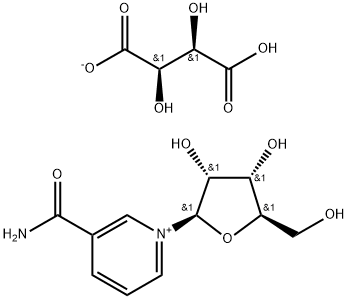
The produced NR (often in chloride form) is chemically unstable and prone to hygroscopic degradation. Salt formation is the key technology to enhance its stability.
Reaction: Purified NR undergoes a neutralization reaction with L-Tartaric Acid in a specific solvent system (e.g., ethanol-water) under strictly controlled temperature and pH conditions.
Crystallization and Purification: The reaction mixture is then subjected to slow cooling or solvent evaporation to induce the crystallization of NR Tartrate. This step is crucial for determining the product’s purity and crystal form. Subsequent filtration, washing, and vacuum drying yield a high-purity white to off-white crystalline powder.
Quality Control: The final product must be analyzed by High-Performance Liquid Chromatography (HPLC) to determine NR content and purity. Its structure is confirmed via Nuclear Magnetic Resonance (NMR) and Mass Spectrometry (MS). Additional tests for heavy metals and microbial residues ensure it meets pharmaceutical/dietary supplement standards.
- Why Tartaric Acid?
Enhanced Stability: The salt form significantly reduces NR’s hygroscopicity, preventing hydrolysis during storage and extending shelf life.
Optimized Solubility & Bioavailability: The tartrate salt has good solubility in water, facilitating absorption in the body.
High Safety Profile: L-Tartaric Acid is a natural organic acid found in fruits (e.g., grapes, bananas) and a common food-grade acidulant, ensuring a strong safety profile.
- Core Efficacy and Mechanism of Action of NR Tartrate
NR Tartrate dissociates into NR molecules and tartaric acid in the body. Its core benefits are entirely derived from NR’s ability to elevate NAD+ levels.
Primary Mechanism of Action:
After cellular uptake via specific transporters, NR is rapidly converted into NAD+ through a two-step enzymatic process (first phosphorylated to NMN by NR kinases, then further converted). NAD+ serves as a coenzyme for hundreds of key enzymes, participating in three fundamental biological processes:
- Anti-Aging and Cellular Repair
Activates Longevity Proteins (Sirtuins): NAD+ is the essential substrate for Sirtuin family proteins (especially SIRT1 and SIRT3). These “longevity proteins” repair DNA damage, enhance mitochondrial function, and suppress cellular inflammation and senescence, serving as the primary mediators of NR’s anti-aging effects.
Maintains Telomere Length: Research suggests that elevated NAD+ levels may help slow the rate of telomere shortening, thereby delaying cellular aging.
- Enhances Mitochondrial Function and Cellular Energy
Cellular “Power Generators”: NAD+ is a critical coenzyme in the mitochondrial TCA cycle and oxidative phosphorylation, directly involved in ATP (cellular energy currency) production. Supplementing with NR Tartrate can significantly improve age-related mitochondrial decline, boosting overall energy levels and combating fatigue.
- Supports Brain Health and Cognitive Function
Neuronal Energy Supply: The brain is a high-energy-demand organ. Healthy mitochondria are crucial for cognition. By increasing brain NAD+ levels, NR supports neuronal energy metabolism. Numerous preclinical studies show its potential to improve age-related cognitive decline, memory, and neuroplasticity.
Neuroprotection: Its antioxidant and anti-inflammatory properties help protect neurons from oxidative stress.
- Promotes Metabolic Health
Improves Insulin Sensitivity: By activating pathways involving SIRT1, NR helps regulate glucose metabolism and improve insulin resistance, offering potential benefits for preventing and managing type 2 diabetes.
Regulates Lipid Metabolism: It promotes fat oxidation in the liver and muscles, reducing lipid accumulation and supporting healthy weight management.
- Cardiovascular Protection
Improves Vascular Function: Elevated NAD+ activates SIRT3, protecting vascular endothelial cells, improving blood flow, and potentially helping to modulate cholesterol levels associated with cardiovascular risk.
III. Comparative Advantages Over Traditional NAD+ Precursors
Compared to Niacin (NA), Nicotinamide (NAM), and Nicotinamide Mononucleotide (NMN):
- Niacin (NA): Causes no “flushing” side effect and has a more efficient conversion pathway.
- Nicotinamide (NAM): Does not inhibit Sirtuin activity and has a dedicated cellular uptake pathway.
- NMN: Has a smaller molecular size. Research indicates NR may enter cells directly via specific transporters, whereas NMN might need conversion to NR outside the cell first. NR Tartrate also holds market advantages in terms of stability and production cost.
- Safety and Future Prospects
NR (including its tartrate form) has been granted GRAS (Generally Recognized As Safe) status by the US FDA. Clinical studies indicate that daily supplementation up to 1000mg is safe and well-tolerated, with reported side effects being rare and mild.
Conclusion
Through advanced fermentation and salt-forming technology, NR Tartrate successfully transforms unstable NR into a stable and efficient dietary supplement ingredient. Its fundamental value lies in effectively and safely elevating intracellular NAD+ levels, delivering comprehensive anti-aging and health-promoting benefits across cellular energy production, DNA repair, and metabolic regulation. As clinical research continues to expand, NR Tartrate is poised to play an increasingly significant role in promoting healthy aging, managing metabolic syndrome, and preventing neurodegenerative diseases, establishing itself as a powerful tool for modern cellular health maintenance.